
- (1) Extreme poverty is the insufficiency of household income to afford necessary food.
- (2) Poverty is the insufficiency of household income to purchase goods and services that meet the basic needs of its members.
- (3) The figures presented for Latin America correspond to 18 countries. For an overview of the incidence of poverty in Caribbean countries, see box I.2 in Economic Commission for Latin America and the Caribbean (ECLAC), Social Panorama of Latin America and the Caribbean, 2023 (LC/PUB.2023/18-P/Rev.1), Santiago, 2023.
- (4) Ibid.
- (5) Ibid.
- (6) A. Arenas de Mesa, C. Robles and J. Vila, “El desafío de avanzar hacia la sostenibilidad de los sistemas de pensiones en América Latina”, Social Policy series, Santiago, Economic Commission for Latin America and the Caribbean (ECLAC), 2024, forthcoming.
- (7) N. Figueroa and R. Holz, “Las persistentes brechas de protección social en la región”, El futuro de la protección social ante la crisis prolongada en América Latina: claves para avanzar hacia sistemas universales, integrales, resilientes y sostenibles, Social Policy series, No. 246 (LC/TS.2023/163), C. Robles and R. Holz (coords.), Santiago, Economic Commission for Latin America and the Caribbean (ECLAC), 2023.
- (8) In terms of health spending, in 2014, PAHO set a target of 6% of GDP as a necessary condition for reducing inequities and increasing financial protection within the framework of universal access to health and universal health coverage. See Pan American Health Organization (PAHO), Strategy for Universal Access to Health and Universal Health Coverage, Washington, D.C., 2014.
- (9) Economic Commission for Latin America and the Caribbean (ECLAC), Institutional Frameworks for Social Policy in Latin America and the Caribbean: a Central Element in Advancing towards Inclusive Social Development (LC/CDS.5/3), Santiago, 2023.
- (10) A. Arenas de Mesa and C. Robles, “Introducción”, Los sistemas de pensiones no contributivos en América Latina y el Caribe: avanzar hacia la sostenibilidad con solidaridad, Libros de la CEPAL, A. Arenas de Mesa and C. Robles (eds.), Santiago, Economic Commission for Latin America and the Caribbean (ECLAC), forthcoming.

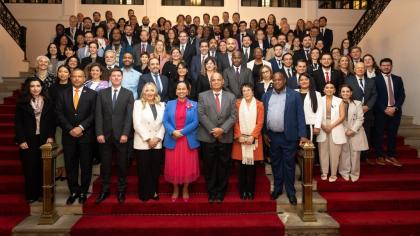
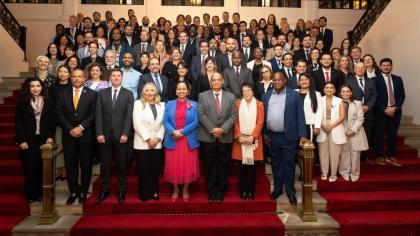
La CEPAL organizó la Primera Conferencia Regional de las Comisiones de Futuro Parlamentarias en Santiago de Chile, 20 y 21 de junio de este año, para lanzar una iniciativa de alto nivel que permita aumentar las capacidades de prospectiva legislativa y gobernanza anticipatoria mediante el establecimiento de una red de Comisiones del Futuro de los parlamentos de América Latina y el Caribe.
Hero image
Date
The current climate and displacement crisis have become increasingly evident. Countries in Latin America and the Caribbean seek to strengthen the protection, preparation, and resilience of forcibly displaced people and communities in such contexts.
Hero image
Date
La actual crisis climática y de desplazamiento es cada vez más evidente. Los países de América Latina y del Caribe buscan fortalecer la protección, preparación y resiliencia de las personas y comunidades desplazadas por la fuerza en estos contextos.
Hero image
Date
According to a new special report by the agencies, the cost of inaction on hunger and food insecurity represents an average of 6.4% of the GDP of the countries studied.
Hero image
Date
De acuerdo con un nuevo reporte especial realizado por las agencias, el costo de la inacción frente al hambre y la inseguridad alimentaria representa en promedio un 6,4% del PIB de los países estudiados.
Hero image
Date
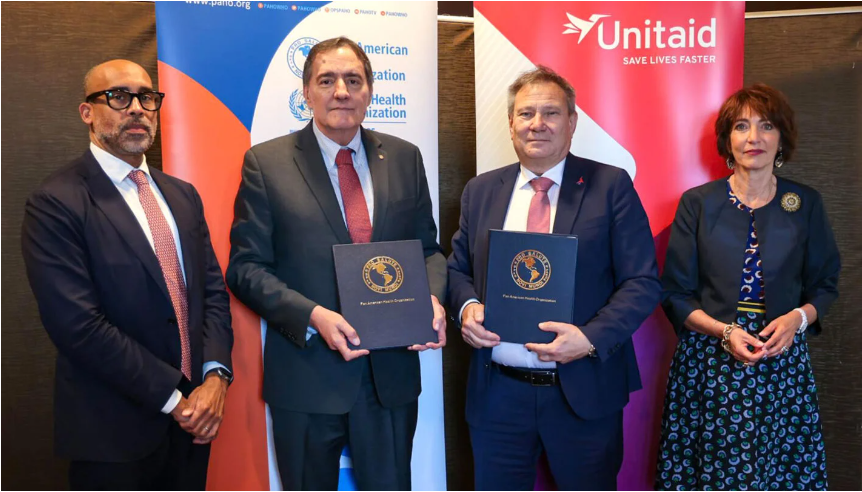
The Pan American Health Organization (PAHO) and global health initiative Unitaid signed a Memorandum of Understanding today to intensify collaboration to end 30 preventable communicable diseases in the region by 2030, such as cervical cancer, HIV and Chagas disease.
Hero image
Date
La Organización Panamericana de la Salud (OPS) y la iniciativa de salud global Unitaid firmaron hoy un memorando de entendimiento para intensificar la colaboración con el fin de eliminar 30 enfermedades transmisibles prevenibles en la región para 2030, como el cáncer cervicouterino, el VIH y la enfermedad de Chagas.
Hero image
Date
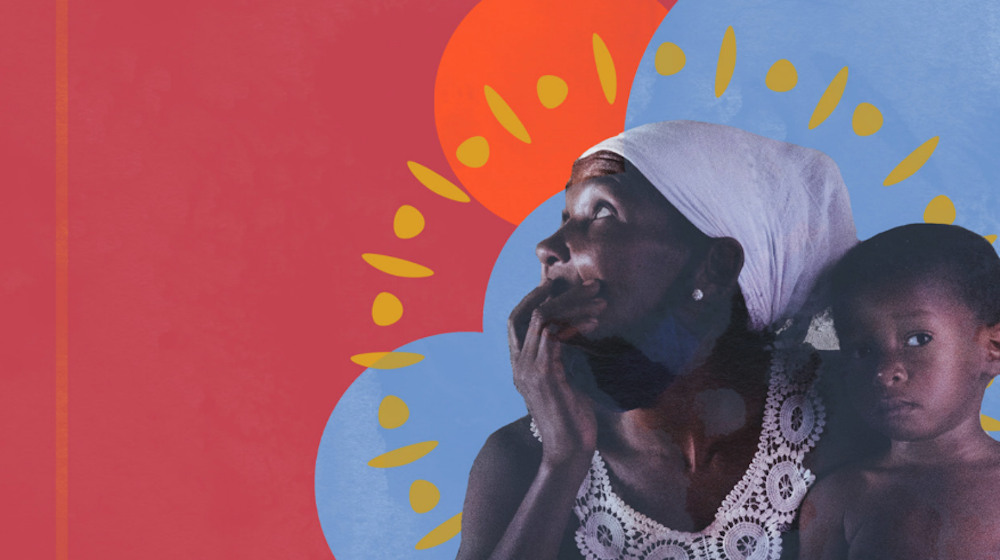
Published on 21 March, the International Day for the Elimination of Racial Discrimination, the brief also examines how society’s poorest and most vulnerable, despite having contributed very little to the global climate crisis, are too often left to deal with its worst effects.
Hero image
SDG
Date
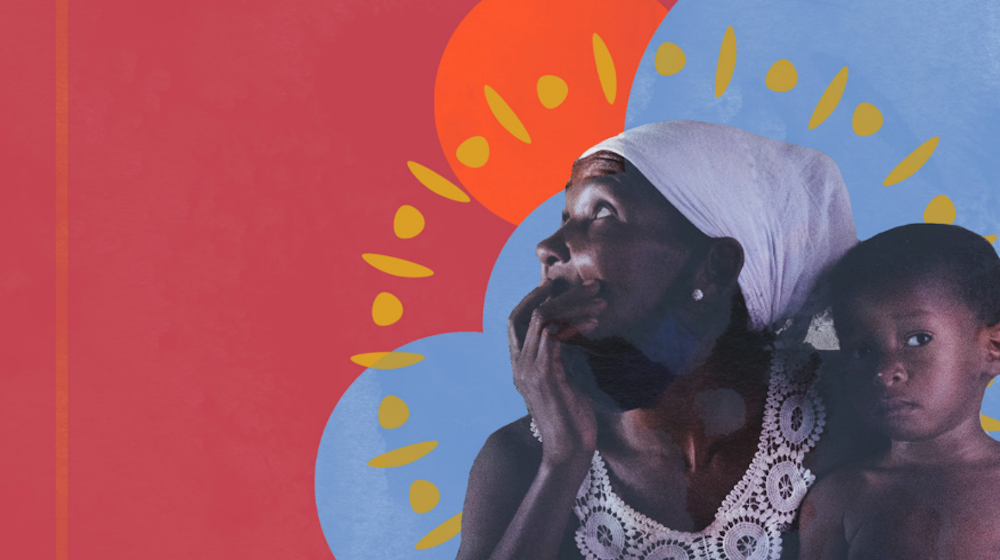
En un nuevo informe de promoción, “En nuestras voces: Mujeres afrodescendientes en defensa de la justicia climática y reproductiva”, el UNFPA explora la manera en que el cambio climático perjudica desproporcionadamente a las mujeres afrodescendientes y a otros miembros de comunidades marginadas, y multiplica los obstáculos para lograr la salud y los derechos sexuales y reproductivos.